01 · The idea
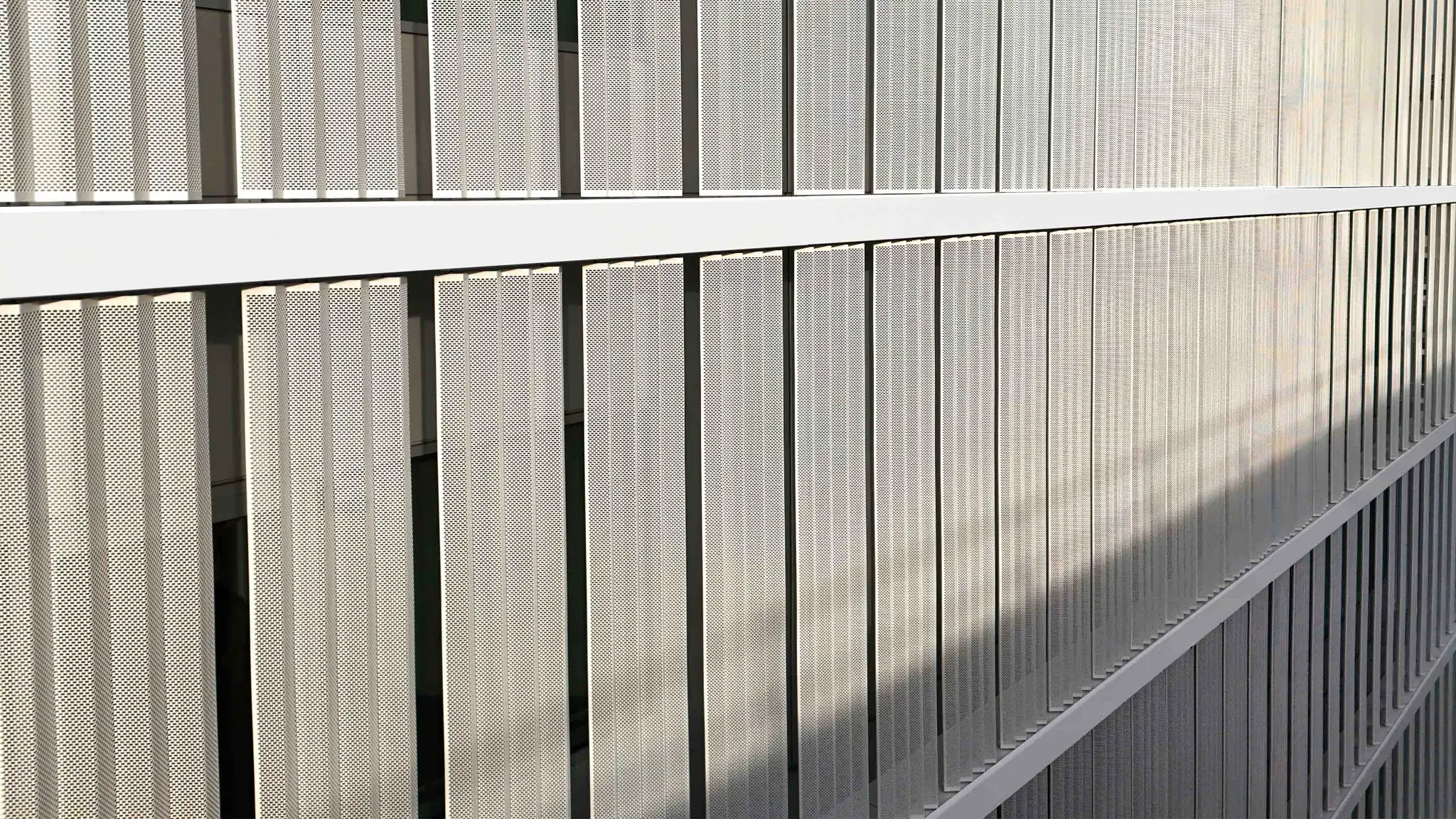
Keep the view, control the direct sun.
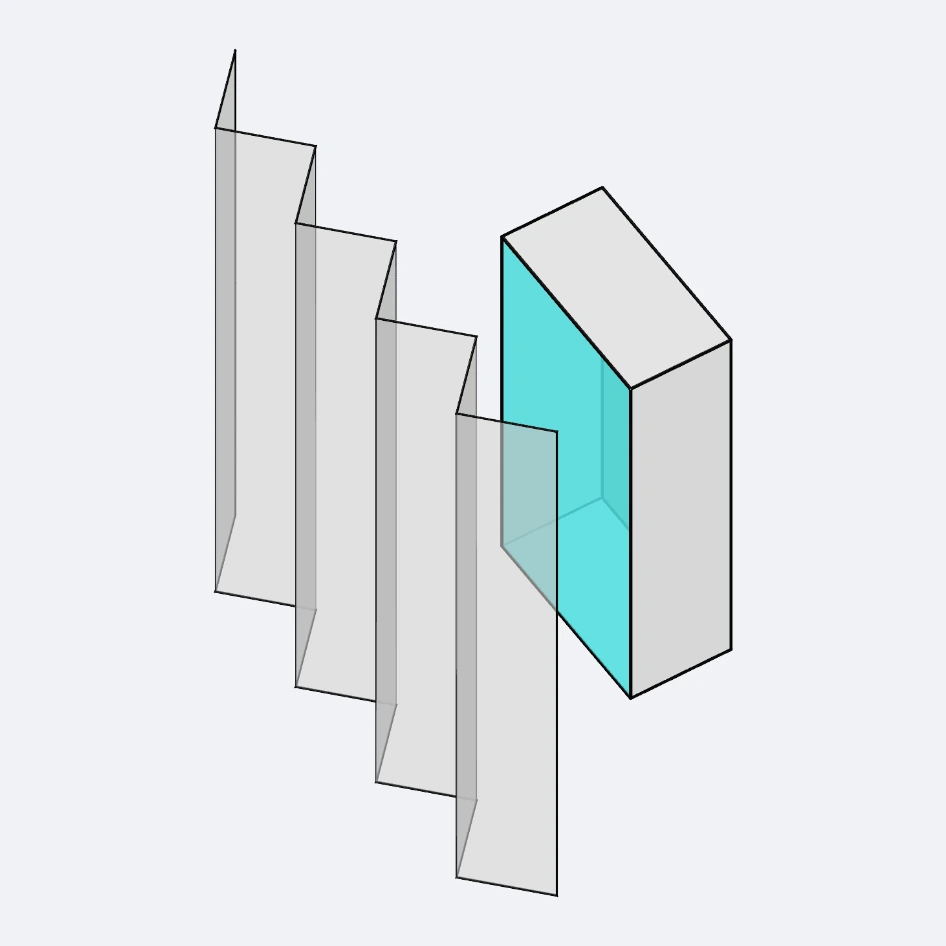
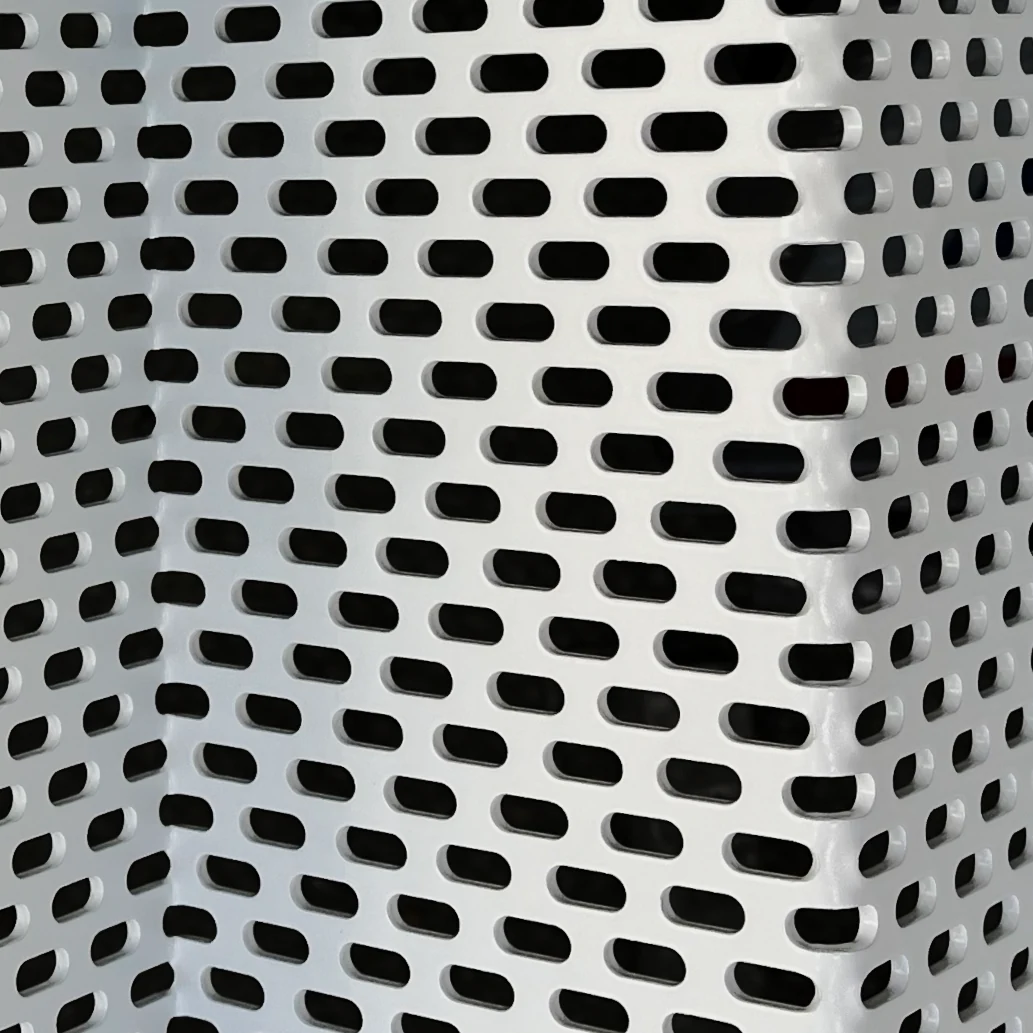
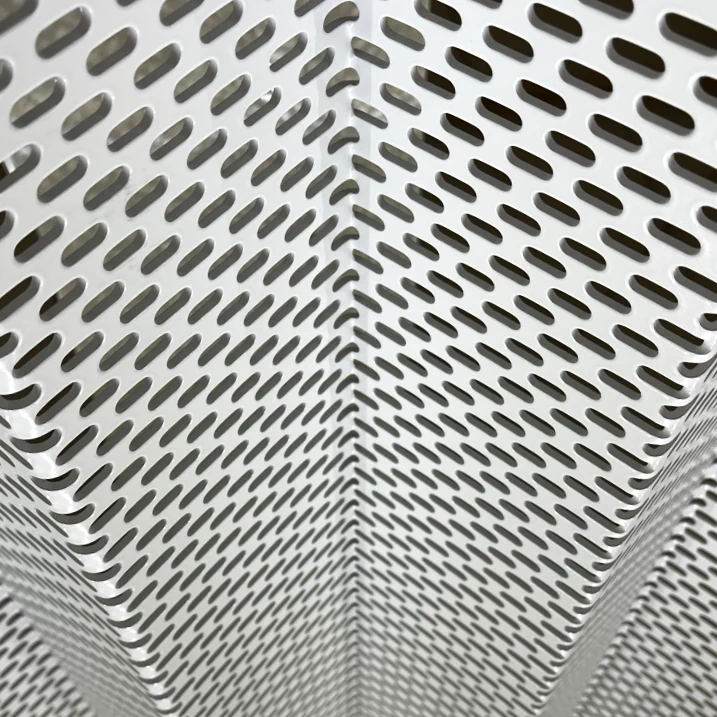
A folded, perforated metal layer stands in front of the glazing. The perforation shape and size were decided during a separate three-day workshop with the design team; this project takes that geometry as its starting point. Viewed straight on, the tested 14 × 6 mm opening in 3 mm material is roughly 40% open. At oblique angles, the fold masks more of that opening. The same mesh therefore presents a different path to direct sunlight as the sun moves.
02 · The method
Measure the opening from every direction.
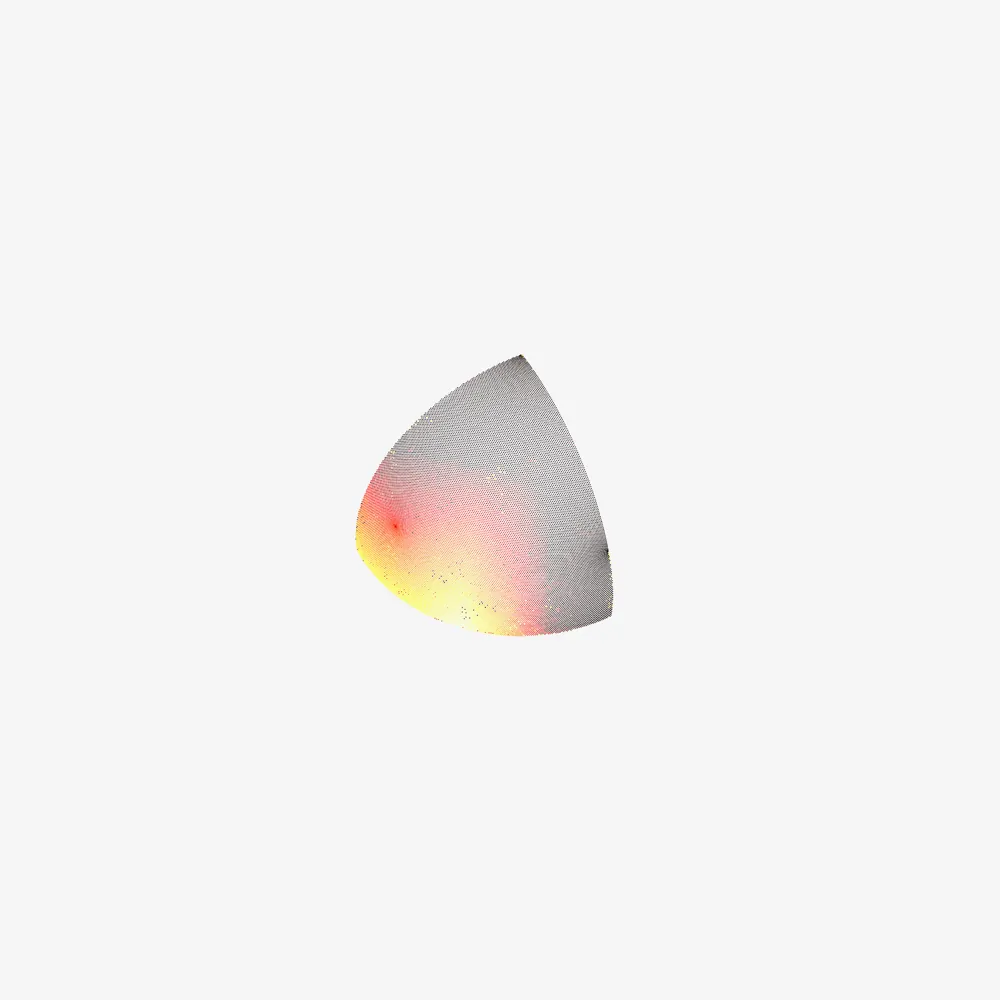
The Rhino and Grasshopper study sends test rays through the folded opening from 83,772 directions on a hemisphere. Each point records the fraction of direct light that passes. Four quarters repeat exactly, so one 20,943-point quarter reconstructs the field. The solar path can then be aligned with that fixed field for a chosen location and facade orientation.
For display and lookup, 205 isolated numerical outliers were replaced with the mean of six nearby directions where five neighbors agreed; the original source data is preserved.
03 · Explore the field
Follow a sun path through the mesh.
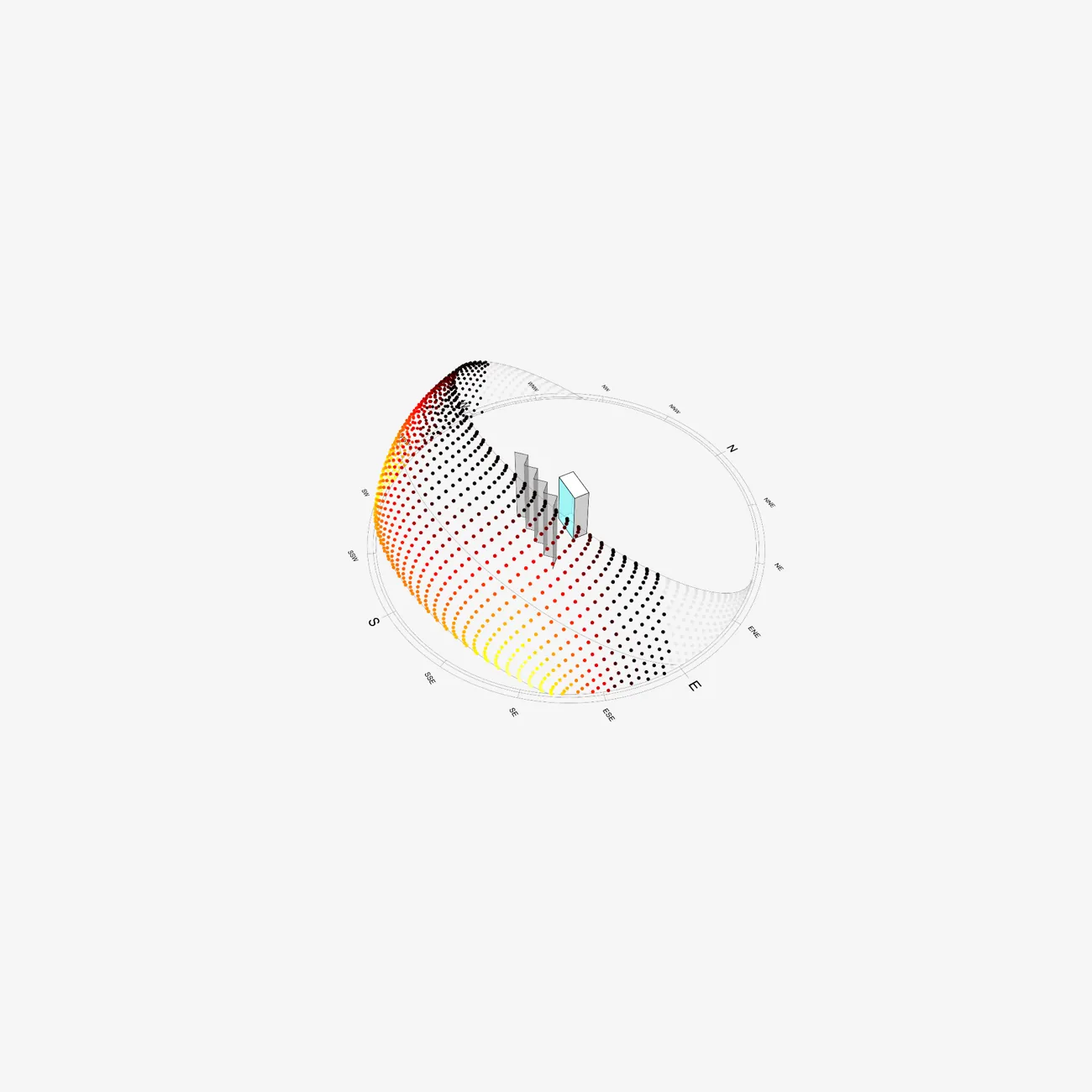
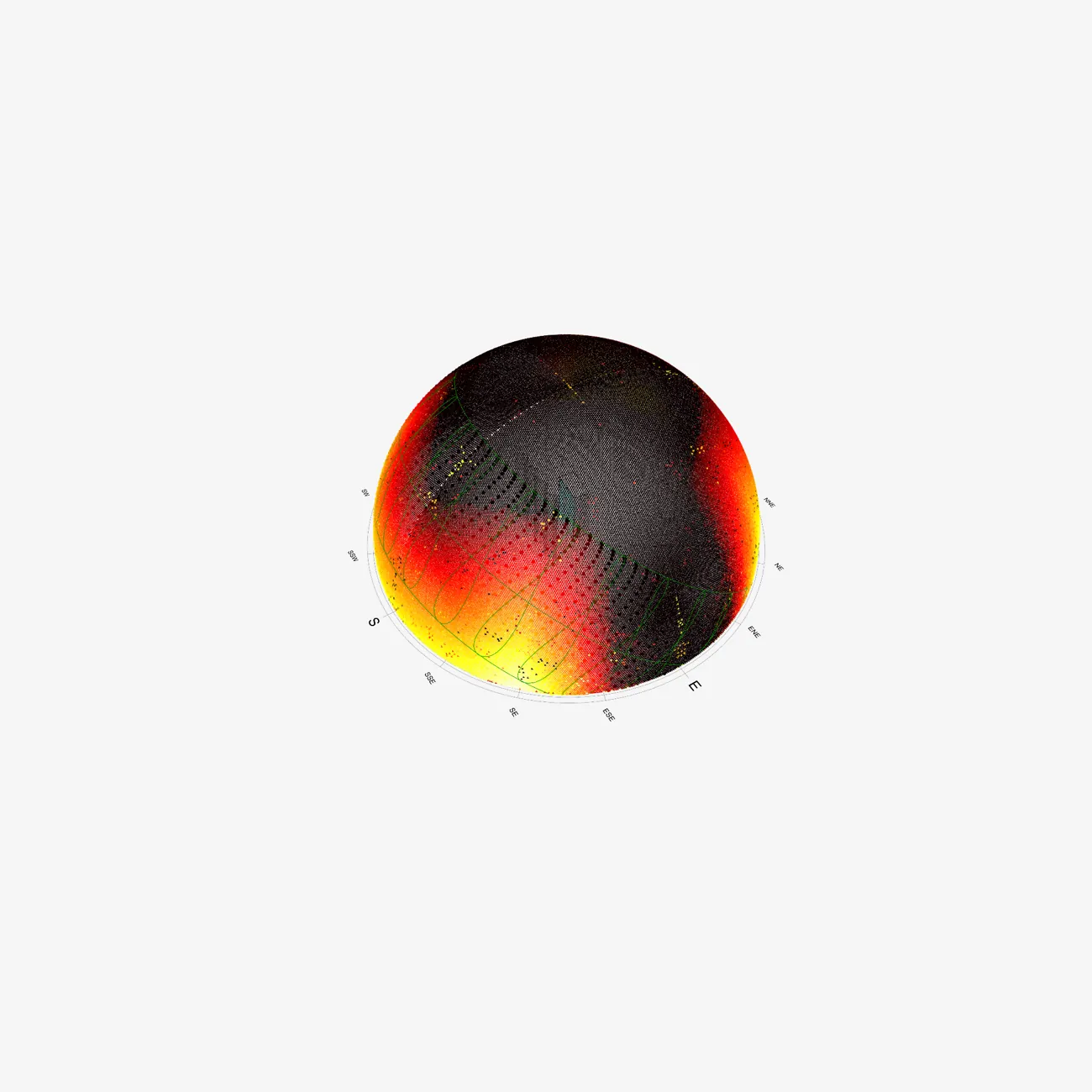
The colour field is simulated directional transmittance (0% opaque, up to 40% open to direct light). Search a city, choose the facade direction, then move through a day. June and December solstice paths remain visible for comparison.
Directional field
Drag to rotate the hemisphere
Colour shows sky directions between this city’s June and December solstice paths in front of the facade. Other directions are grey.
Selected sun position
12:00
These values describe directional direct-beam transmission. They do not include diffuse daylight or a weather-weighted radiation total.
Through the day
Direct light transmittedEnter coordinates manually
04 · What this establishes
From directional data to a site-specific reading.
One tested opening can be read against the solar paths of different cities and facade orientations. The result makes its direct-sun transmission legible over the year, and shows how the same process could be applied to other profiles without treating this prototype as a product ranking.
05 · Project benefit
A clearer basis for choosing a mesh.
Designers can use this method to compare future opening profiles against a project’s location, orientation, and view priorities, selecting a shape that screens direct sun where it matters while preserving useful outward visibility.
For manufacturers, equivalent directional fields could turn a catalogue of mesh geometries into a more useful specification tool, linking each option to the solar conditions it serves.
Services